
Datalink
Unmanned Aerial Vehicle Wireless Device Test Solution
- High degree of versatility: The processing power of the hardware platform is strong, and there is processing margin, which can be adapted to the testing needs of various models (spread spectrum, frequency modulation, different bandwidths and transmission rates) by updating the software.
- Strong scalability and upgradability: Different functions exist in a modular form. Expanding the system scale can be achieved by increasing the number of signal processing modules. When upgrading RF frequencies, it can be achieved by upgrading RF modules.
- High degree of integration and automation: All equipment can be integrated in one cabinet, and all equipment can be controlled through the network. At the same time, spectrometers, oscilloscopes, power conditioning and matrix switches can be integrated in the system, and the degree of automation testing is high and the efficiency is high.
- Easy secondary development: This platform has a rich secondary development interface and is open to users. Users can easily carry out secondary development and improvement, and quickly improve users' R&D capabilities.
- The broadband signal receiver can simulate the ground receiving device of the data link, which is used to receive the downlink to-be-tested signal of the data link, perform data demodulation, protocol processing, analyze the reception performance and protocol performance, and complete the verification of the function and performance of the unmanned aerial vehicle data link transmitting device.
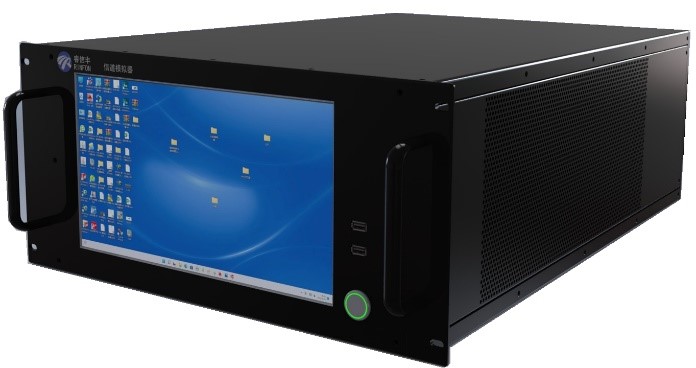
Overview
With the development of science and technology, new equipment continues to emerge, rapid replacement, unmanned aerial vehicles, rockets and other unmanned aerial vehicles have also developed rapidly in recent years, and various signal systems coexist on data link equipment, navigation equipment and other wireless equipment on unmanned aerial vehicles, which makes the challenge of unmanned aerial vehicles' wireless equipment research and development, testing, integrated assembly, field inspection and field support more and more challenging. In order to meet the test assurance requirements of various models of unmanned aerial vehicles, it is necessary to have a universal test system solution that can meet the test needs of different models of wireless equipment.
Ruixinf has proposed a universal unmanned aerial vehicle wireless equipment test solution to address these challenges. The test system integrates image instruction test equipment, satellite navigation simulation and forwarding equipment, wideband signal and interference generator, wideband signal receiver, channel simulator and other equipment. All equipment adopts PXIe bus architecture, which has a high degree of integration, small size, simple connection, small size of the entire equipment, many channels, and high reliability.
The image command test equipment is integrated in a PXIe chassis and supports two working modes: the unmanned aerial vehicle (UAV) can be simulated to achieve the functions of uplink image transmission and downlink command reception, and the UAV motorized detection test can be completed; at the same time, the ground equipment and the UAV can be simulated to achieve uplink command transmission, downlink image reception, and downlink duty reception, and the UAV relay detection test can be completed. The two operating modes are shown in the following two diagrams:
The satellite navigation simulation and forwarding equipment adopts a modular design and can be integrated with the command test equipment in a PXIe chassis. It supports two operation modes: when operating in the simulation mode, it can simulate the signals of multiple frequency points of the GPS, GLONASS, BD1, BD2 satellite navigation system. When operating in the forwarding mode, it supports full-band forwarding of all navigation signals. Testing of unmanned aerial vehicle satellite navigation equipment can be completed in both modes.
The wideband signal and interference generator can generate arbitrary modulated signals and interference signals, which can be used to simulate the test data and signal excitation of the data link in the actual working state, and at the same time can generate various types of electromagnetic interference signals of the air-to-ground data link system, providing a signal environment for the test of the unmanned aerial vehicle data link system.
The broadband signal receiver can simulate the ground receiving device of the data link, which is used to receive the downlink to-be-tested signal of the data link, perform data demodulation, protocol processing, analyze the reception performance and protocol performance, and complete the verification of the function and performance of the unmanned aerial vehicle data link transmitting device.
The wideband channel simulator can simulate various characteristic parameters of the wireless communication channel, such as frequency, fading, dynamic delay, attenuation, noise, interference, etc. At the same time, it can accurately simulate the signal change characteristics caused by the relative movement of the receiver and the transmitter, and provide a near-real channel simulation test environment for unmanned aerial vehicle wireless equipment testing.
Wideband signal and interference generators, wideband signal receivers, and wideband channel simulators can form a simulation verification system for the research and verification of new institutional data links.
Unmanned Aerial Vehicle Wireless Equipment Test System has the following advantages:
The above advantages of the unmanned aerial vehicle wireless equipment test system enable it to be widely used in various types of unmanned aerial vehicle wireless communication equipment research and development, production, integration, verification, field testing, field support and other occasions to help customers quickly complete the development of equipment, improve customer research and development capabilities, accelerate product delivery cycles, and significantly reduce comprehensive costs.
- High degree of versatility: The processing power of the hardware platform is strong, and there is processing margin, which can be adapted to the testing needs of various models (spread spectrum, frequency modulation, different bandwidths and transmission rates) by updating the software.
- Strong scalability and upgradability: Different functions exist in a modular form. Expanding the system scale can be achieved by increasing the number of signal processing modules. When upgrading RF frequencies, it can be achieved by upgrading RF modules.
- High degree of integration and automation: All equipment can be integrated in one cabinet, and all equipment can be controlled through the network. At the same time, spectrometers, oscilloscopes, power conditioning and matrix switches can be integrated in the system, and the degree of automation testing is high and the efficiency is high.
- Easy secondary development: This platform has a rich secondary development interface and is open to users. Users can easily carry out secondary development and improvement, and quickly improve users' R&D capabilities.
Technical Downloads
Enter your real contact details. The technical file will be sent to your email (attachment + download link).
Get a Quote
Please fill in the form below and we will contact you soon.
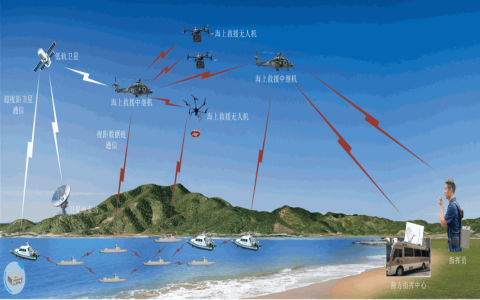
Marine-Land-Air Joint Rescue...
This solution builds an integrated TT&C comm...

Emergency Communication Solu...
To solve communication blind zones caused by mou...
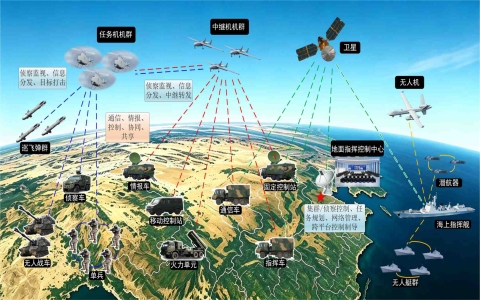
Special-application Data Lin...
The special-application data link equipment buil...

Multi-site Disaster Rescue C...
When public networks collapse and rescue teams a...